Article
Conduct AI, don't just use it
What happens when you conduct AI instead of using it? How a personal body of work became a working organisation in eight days, with a human in charge of every decision.
23 October 20265 min read
For about two years I've been writing and publishing under the name Fawzooz: posts, articles and books about AI, cognitive security and governance. It was always a personal project, my own voice, with no formal entity behind it.
Then I set myself a challenge: how far can AI go in turning that personal body of work into a complete, working organisation, if a human stays in charge of every decision?
I lead AI and information security at ISD in Dubai, and I owe a lot to the culture I work in there every day, a culture that keeps applying the newest methods and pushing technology to its limits. That spirit is what made me take this challenge all the way, as a personal proof of concept, outside working hours.
The method: Vibe Orchestration
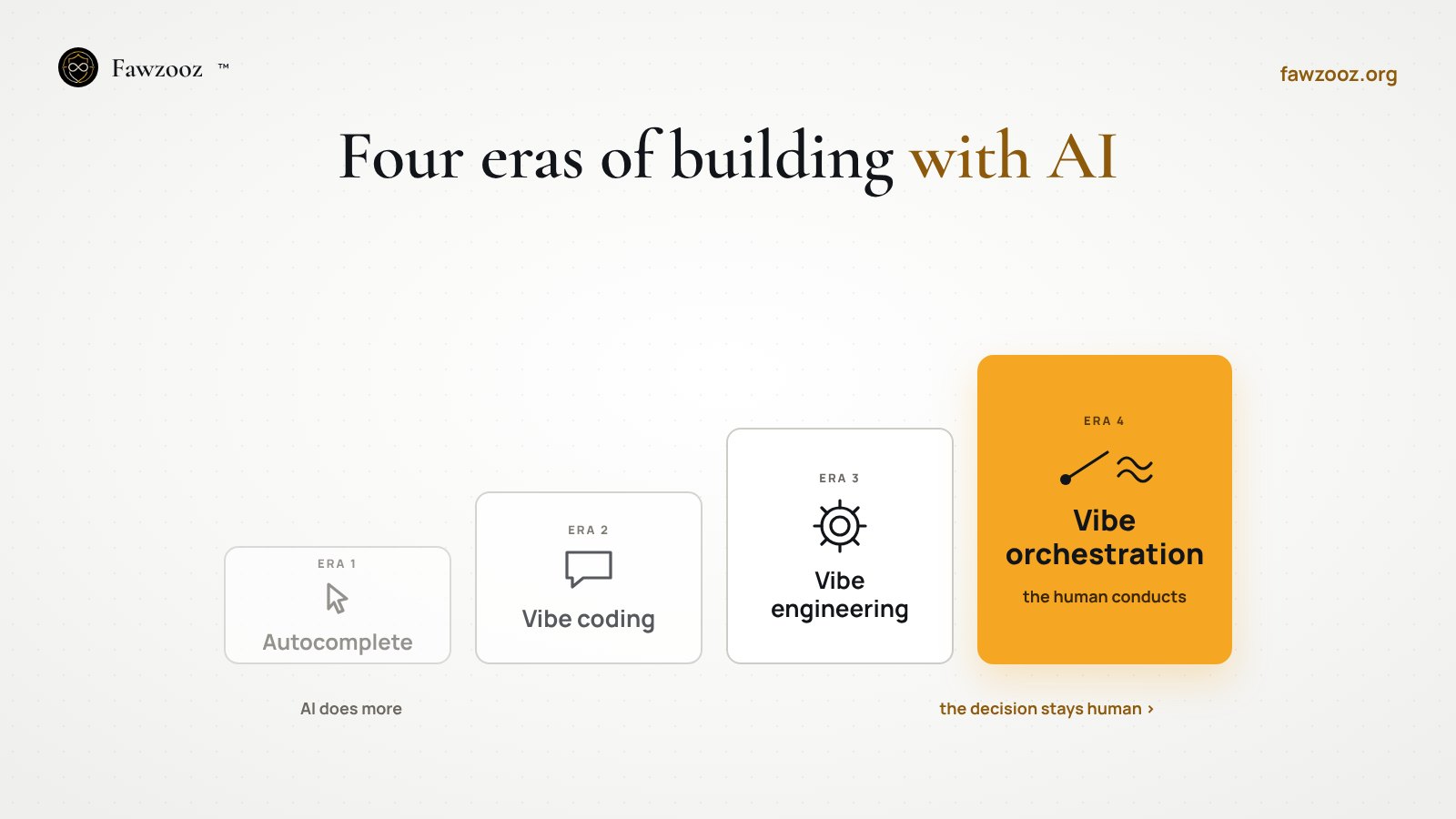
In my white paper I describe four eras of building with AI: autocomplete, vibe coding, vibe engineering, and finally vibe orchestration. In the fourth, the human stops writing the work and starts conducting it.
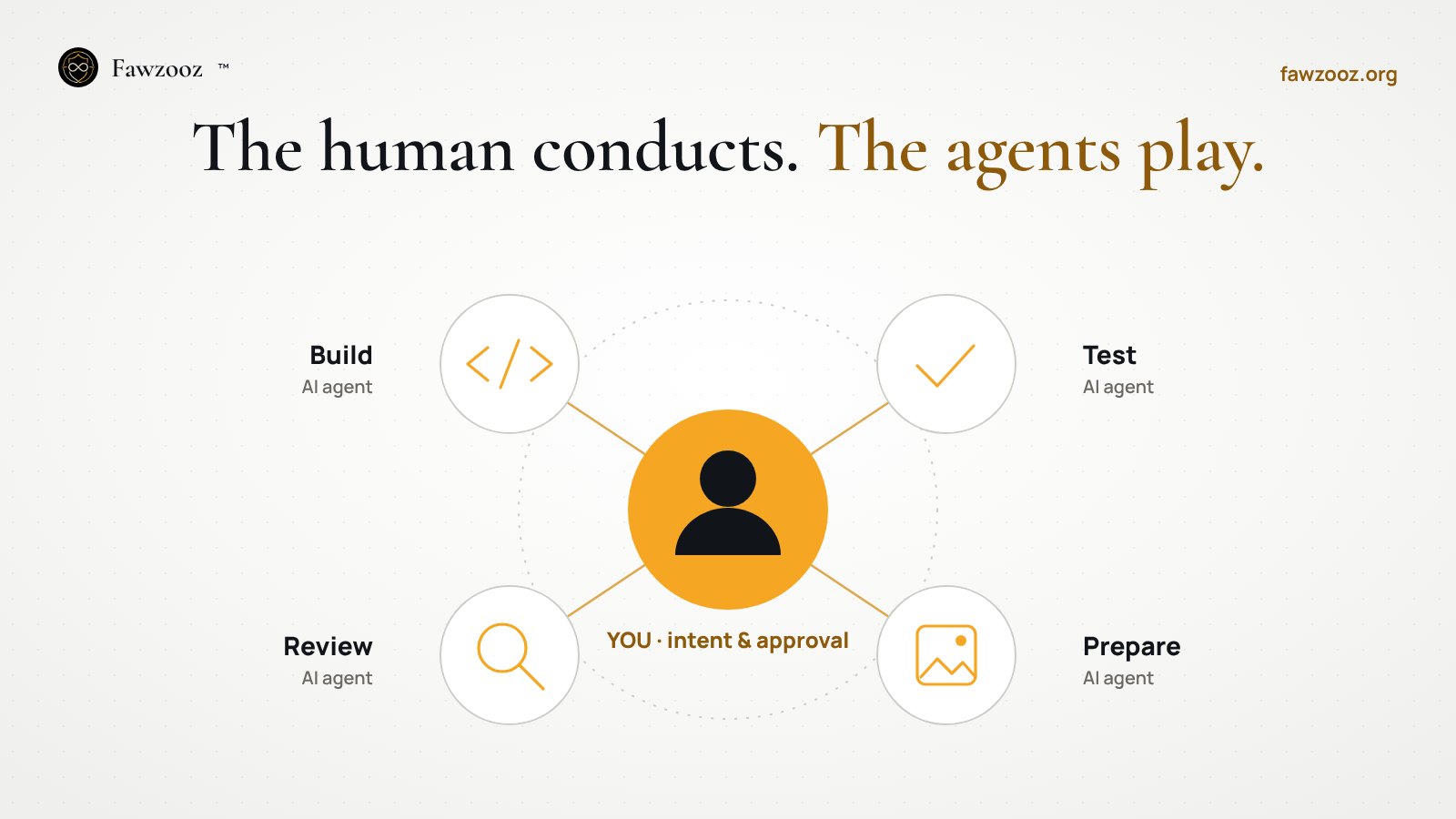
I write the intent: what I want, for whom, and in what spirit. Then a team of AI agents does the work. One builds, one tests, one reviews for security and logic, and one prepares the content. Nothing reaches anyone without my approval.
What the orchestra did
- Paperwork and registration: it set up and filled in application forms, prepared and automated submissions, and helped carry Fawzooz through company registration, listing on the UK Register of Learning Providers (UKRLP), and ISBNs for 22 editions.
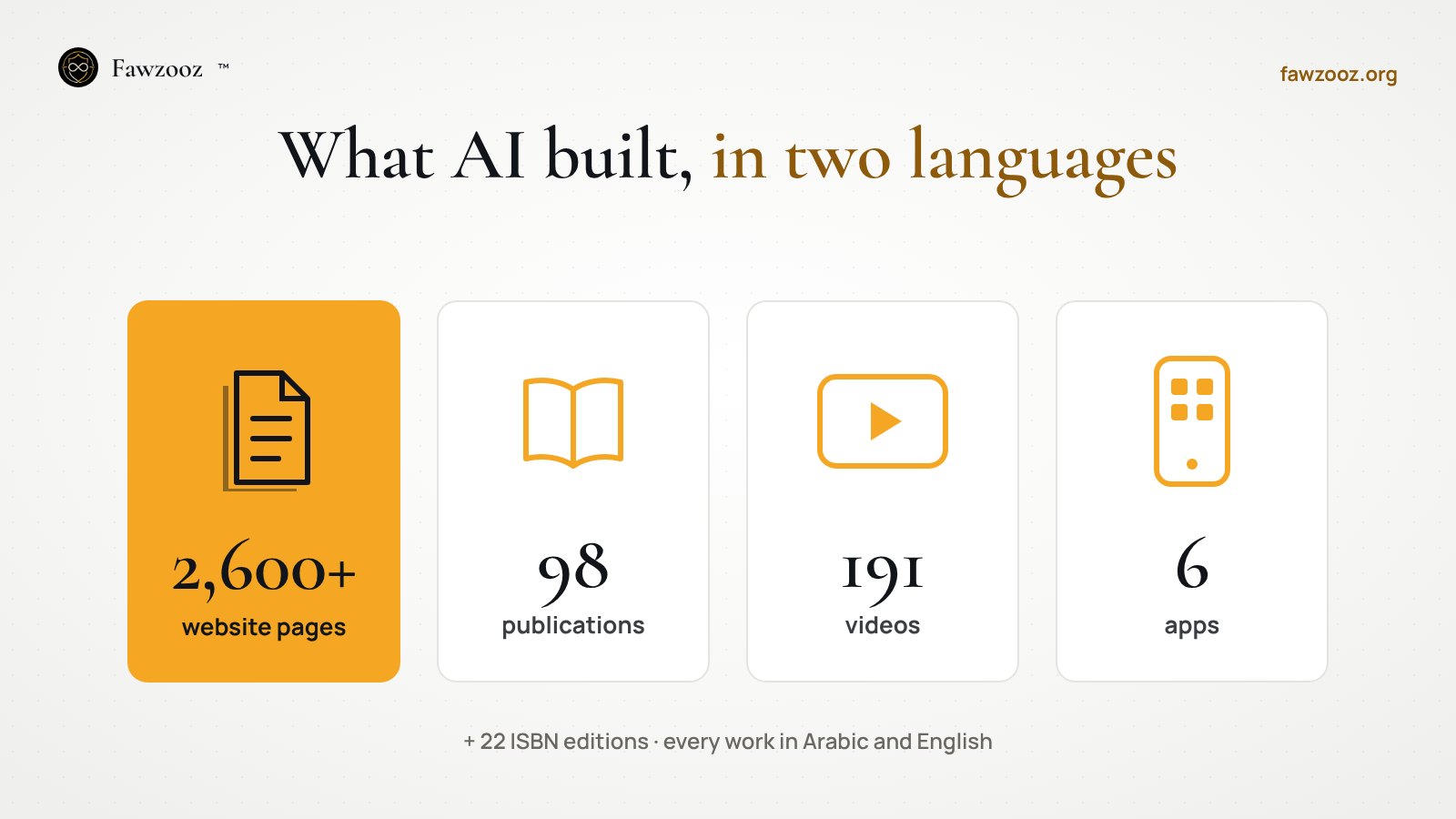
- A complete training programme: it helped develop the Wise AI Ambassador, a programme with six degrees, 34 units, exercises, gates with worked examples, a syllabus, video lessons, a study app, and a certificate system where every certificate has its own number.
- The books, revamped: my earlier books were revised, updated with the latest developments, given new covers and a consistent design, and published as new editions, every one of them in Arabic and English.
- Writing and translation: two years of posts and articles became papers, lessons and a story magazine, in both languages.
- Design: the brand, the certificate, the membership card, and every presentation and post.
- Engineering: a website of more than 2,600 pages in two languages, six apps, and a connector that lets AI assistants answer from Fawzooz's own content.
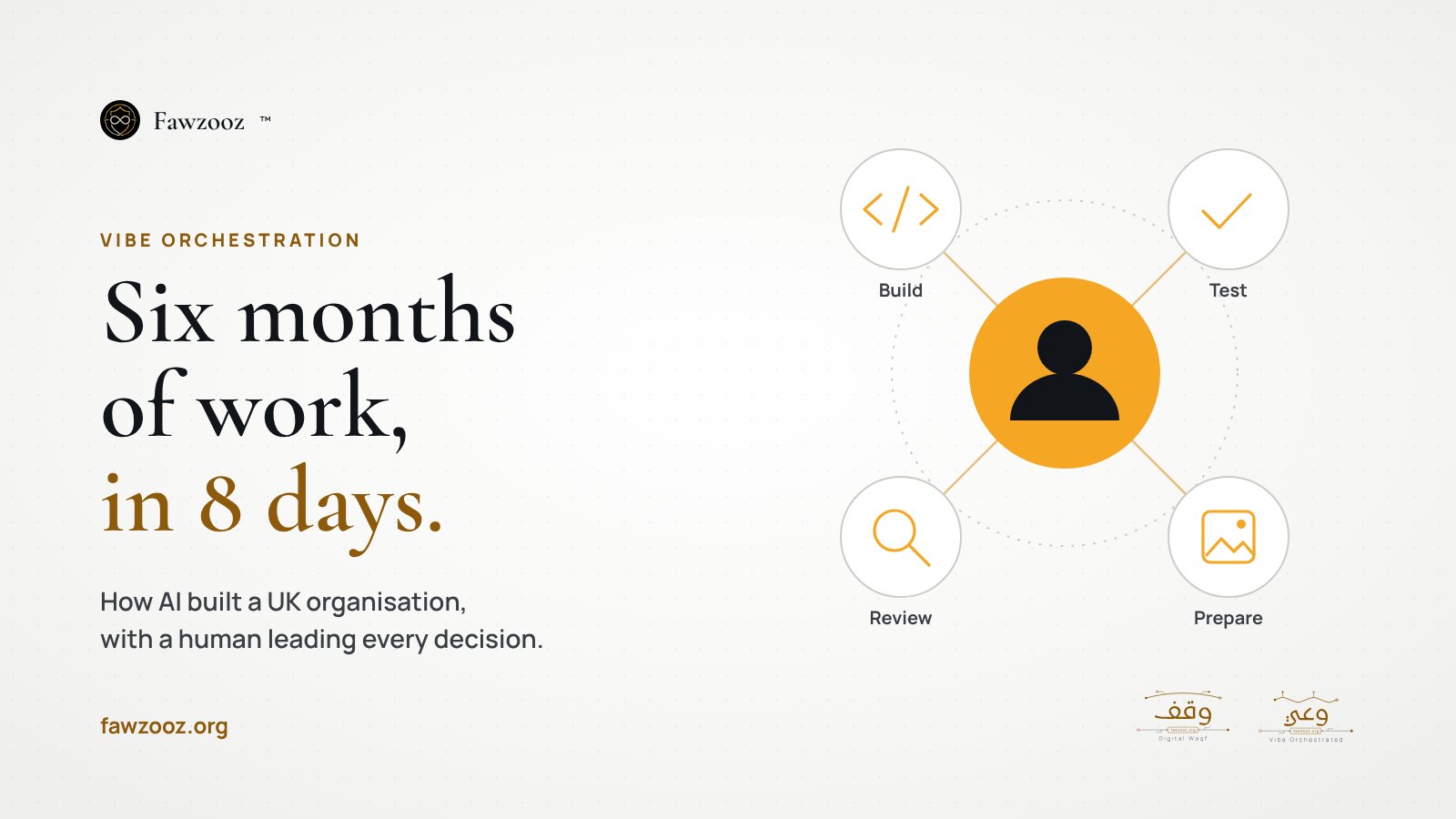
Work began on 29 September 2026. Done the usual way, I estimate it would have taken a team of ten people about six months, some 7,800 hours. It took 8 days, with 161 changes that I reviewed and approved one by one.
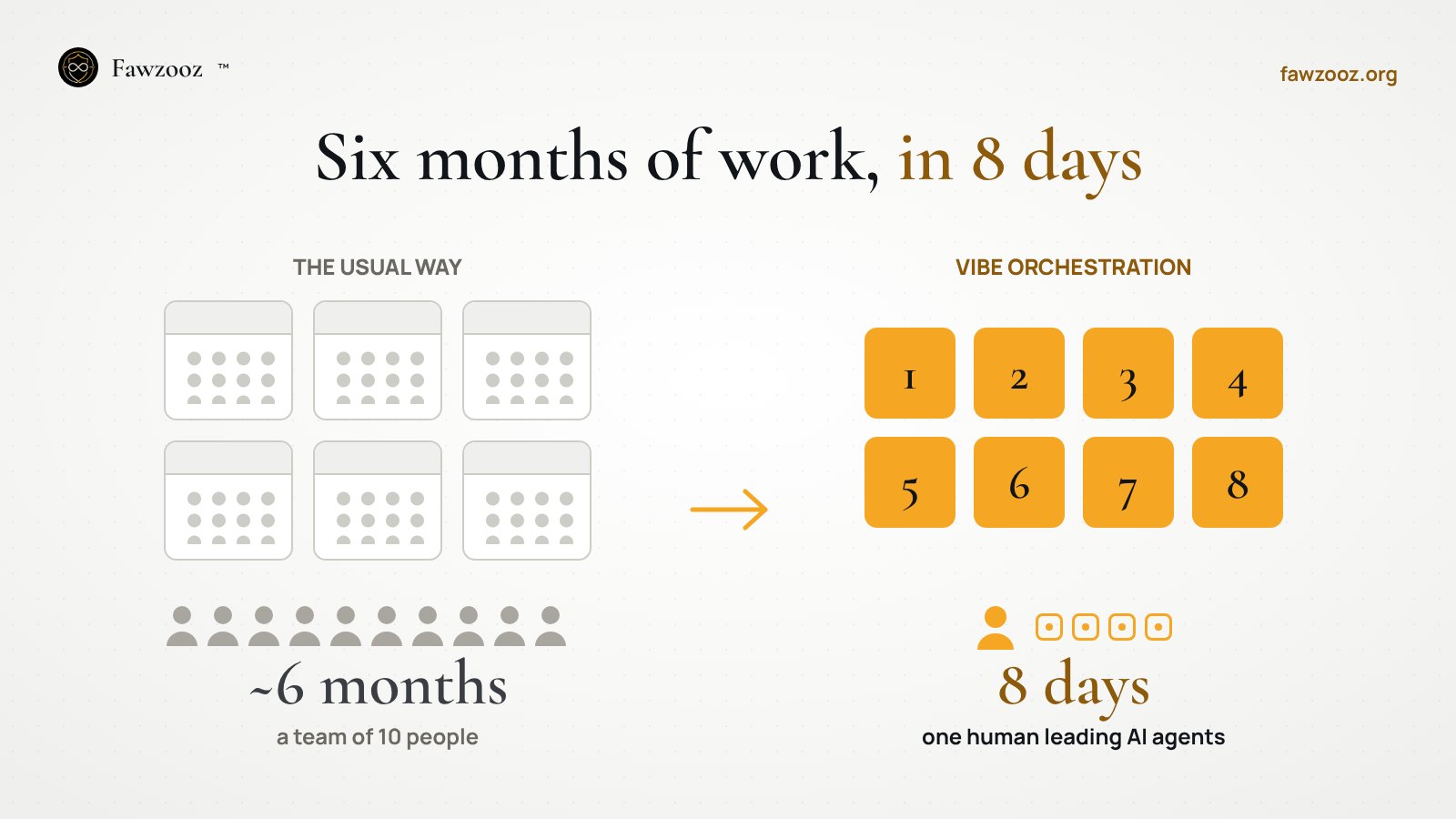
This is the real lesson: AI didn't replace judgement. It replaced the waiting.
Why it doesn't conflict with my work
Integrity matters to me as much as the idea, so I set it up carefully:
- It is a separate legal entity: a non-profit registered in England and Wales in October 2026.
- It is not a commercial venture and doesn't compete with my employer. Its knowledge is open to everyone.
- AI agents do the daily work, so it doesn't take time or effort from my professional role. I set the direction and approve what is published.
What it gives back to my professional role
This experience has become my live laboratory for the questions I deal with every day as a Chief AI Officer and CISO: how do you give AI agents real capability without handing them the keys? I tested in practice what I used to discuss in theory: agents that work in an isolated environment, that get only the context each task needs, and where every change passes through automated tests and then a human decision. I now bring that hands-on experience to my work on AI governance and security, with a clearer view of what works, what breaks, and where the human must stay.
To anyone still hesitant
I understand the hesitation. I've spent my career in security, and caution is part of my job. But I've learnt that the real risk isn't using AI. It's using it without knowing how to lead it, or leaving it to others while you watch. So here is my advice:
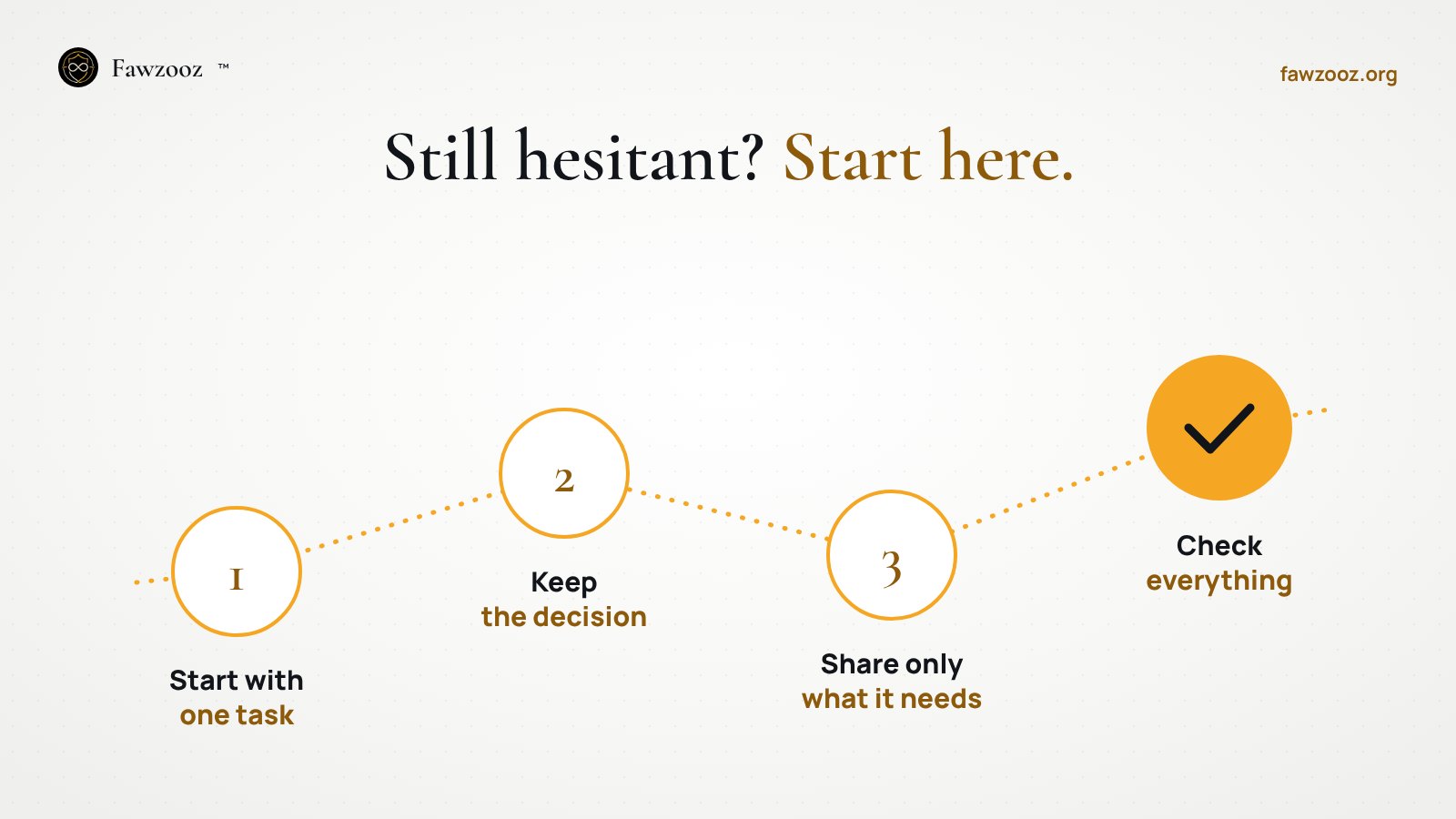
- Start with one real task. Don't start with a big project. Pick something that takes you hours every week, give it to AI, and review the result yourself.
- Keep the decision yours. Let AI draft, build and suggest, but never publish or send anything you haven't read and approved.
- Give it only what it needs. Don't hand it sensitive data or passwords. Give each task the minimum context it needs, and nothing more.
- Treat its output as a first draft, not a final answer. Check the facts, test the work, and ask yourself whether you'd sign your name to it.
- Learn by doing, not by reading about it. An hour of real practice teaches you more than a month of articles.
The gap won't be between those who have AI and those who don't. It will be between those who lead it and those who are led by it.
Today I'm putting the harvest in your hands, open to everyone:
- the books and papers on cognitive security and AI governance,
- the Fawzoozyat story magazine,
- Metn, cards of applied wisdom,
- and the Wise AI Ambassador, a six-degree leadership programme that prepares you to lead teams that are half people and half software.
🎁 To mark the official launch: the Wise AI Ambassador scholarship
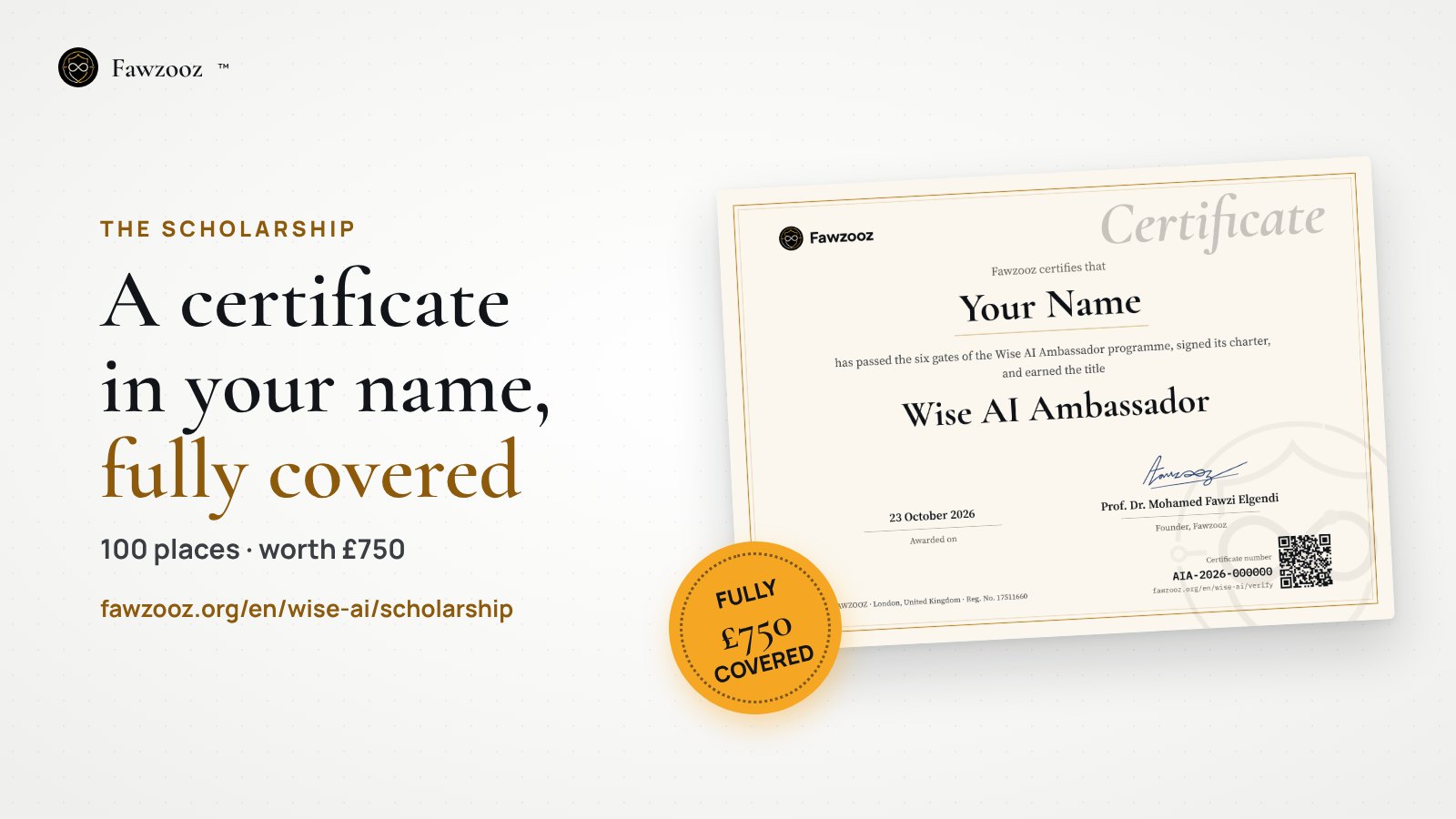
Reading and practising the programme is free for everyone. The certificate is different: Fawzooz reviews the work of your six gates, then issues the certificate in your name with its own number, along with an honorary membership card. Its value is £750, and that's what organisations pay for each member of their teams.
For the launch, Fawzooz will fully cover the certificate and membership card for 100 applicants accepted into the scholarship.
AI helped build this organisation so you can learn to lead it, not let it lead you.
Apply for the scholarship at fawzooz.org/en/wise-ai/scholarship
The full story of the eight days: fawzooz.org/en/publications/launching-fawzooz